
Food Technology
“ Having realised that in cooking there was a vast field of study and development, I said to myself, I will work in such a fashion that I will rise above the ordinary, and I will do my best to raise again the prestige of the chef de cuisine. ”
Department Vision Statement/ Curriculum Intent
Developing aspiring Chefs of the future
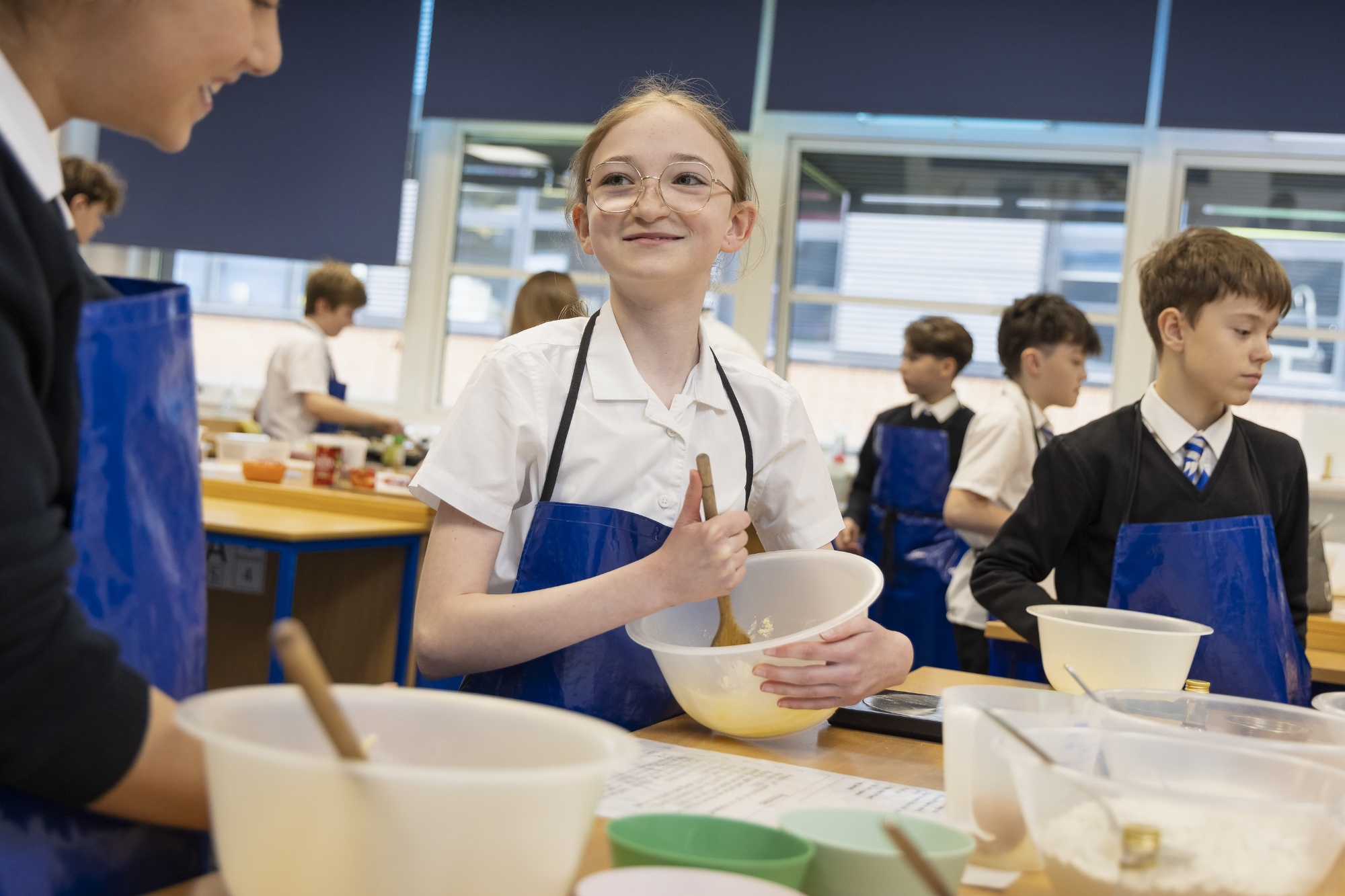
The food technology department offer learners the opportunity to develop their knowledge and understanding of food preparation and nutrition. The practical and theoretical skills learners will acquire throughout the curriculum will empower them to work confidently, independently and develop valuable life skills. Learners will become self-sufficient young adults with a contextual understanding of current diet related health issues within society. The subject also provides therapeutic benefits to the learners as the opportunity to design and create their own dishes can nurture their creativity and give them a sense of accomplishment.
Implementation
We promote a fully inclusive learner lead environment. Learners are encouraged to take control of their own learning through planning and self-assessment tasks. The stimulating environment is supportive and non-judgemental where learners of all abilities are treated with equality and respect and have the opportunity to access experiential learning, to help deepen their knowledge and understanding of food preparation and nutrition.
The subject comprises of experiential learning through practical tasks and theoretical lessons. Learners can experience a hands on approach and exposure to a wide range of vocabulary, as well as fundamental British Values by exploring different cultures and cuisines, including religions in the wider community. This experiential learning enables learners to then deepen their theoretical understanding.
Embedded within the curriculum are links with literacy, numeracy and science. These are implemented through learners developing skills such as measuring, timing, glossary terms, scientific baking processes and definitions, vital for everyday tasks. The food preparation and nutrition department also link in with design technology and art to work on design projects. We believe that the cross curricular project strengthens the sense of achievement that learners experience on completion of the learning activity.
YEAR GROUPS
Year 7 - KS3
| TERM |
|---|
| Term 1 - 5 |
| TOPIC |
|---|
|
Skills developed in this unit. Basic practical cookery skills, Personal Hygiene, health and safety in the kitchen. Practical dishes to be cooked: Fruit salad, Fruit crumble, Pasta salad, Garlic bread, Scones, Cup cakes, Spicy rice, Tomato and pasta soup, Spicy rice and Fruit Muffins. |
| RESOURCES |
|---|
|
Curriculum Booklet Homework Booklet |
| TERM |
|---|
| Term 1 - 5 |
| Aims? |
|---|
|
Aims
Learning outcomes overview Through this scheme of work, pupils will:
|
| RESOURCES |
|---|
|
Curriculum Booklet Homework Booklet |
| TERM |
|---|
| Term 6 |
| TOPIC |
|---|
|
Design and make task for 3 basic dishes. Pupils will research, plan and cook 3 different dishes from a set brief to show everything they have learnt over the year. This will include theory knowledge and practical cookery skills. |
| RESOURCES |
|---|
|
Curriculum Booklet Homework Booklet |
Year 8 - KS3
| TERM |
|---|
| Term 1 - 5 |
| TOPIC |
|---|
|
Skills developed in this unit. Intermediate practical cookery skills, use of more complex cookery skills. Evaluation of practical work, Personal Hygiene, health and safety in the kitchen. Practical dishes to be cooked. Upside down cake, Cheese straws, Sausage rolls, Spaghetti bolognese, Chilli-con-carne, Basic curry, Paella, Homemade pizza, Cheesecake, minestrone soup. |
| RESOURCES |
|---|
|
Curriculum Booklet Homework Booklet |
Year 9 - KS3
| TERM |
|---|
| Term 1 - 5 |
| TOPIC |
|---|
| Practical dishes to be cooked: Risotto, Sweet and sour Chicken, Curry from homemade paste, Victoria sponge, Carrot cake, Chocolate brownie, Sausage and bacon casserole, Quiche, Macaroni and cheese, Breaded chicken nuggets and oven baked wedges. |
| RESOURCES |
|---|
|
Curriculum Booklet Homework Booklet |
Year 10 KS4 - EXAM BOARD - EDEXCEL
Unit 1: The Hospitality and Catering Industry
In this unit learners will gain a comprehensive knowledge and understanding of the hospitality and catering industry including provision, health and safety, and food safety.
Topics:
1.1 Hospitality and catering provision
1.2 How hospitality and catering providers operate
1.3 Health and safety in hospitality and catering
1.4 Food safety in hospitality and catering
Assessment This unit is externally assessed through a written examination
which contributes 40% to the overall qualification grade.
Duration: 1 hour 20 minutes
Number of marks: 80
Format: short and extended answer questions based around
applied situations. Learners will be required to use stimulus
material to respond to questions.
Unit 2: Hospitality and Catering in Action
Chefs and nutritionists are involved in the preparation of menus and reviewing how preparation and presentation methods affect nutritional values. Food on a menu needs to meet the nutritional needs of the customer and be prepared, cooked and served in a certain way to ensure customer appeal and standards are maintained in any establishment; thus food safety and meeting nutritional needs must be the focus of all planning and activities.
Overview of unit
In this unit learners will gain knowledge and understanding of the importance of nutrition and how to plan nutritious menus. They will learn the skills needed to prepare, cook and present dishes. They will also learn how to review their work effectively.
Topics
2.1 The importance of nutrition
2.2 Menu planning
2.3 The skills and techniques of preparation, cooking and presentation of dishes
2.4 Evaluating cooking skills
Assessment This unit is internally assessed through controlled assessment.
The assessment contributes 60% to the overall qualification
grade. Duration: 12 hours
| TOPIC |
|---|
| LO1 Understand the environment in which hospitality and catering providers operate |
| WHY? |
|---|
|
AC1.1 describe the structure of the hospitality and catering industry. AC1.2 analyse job requirements within the hospitality and catering industry AC1.3 describe working conditions of different job roles across the hospitality and catering industry AC1.4 explain factors affecting the success of hospitality and catering providers |
| RESOURCES |
|---|
|
Curriculum Booklet Homework Booklet |
| TOPIC |
|---|
| LO2 Understand how hospitality and catering provisions operate |
| WHY? |
|---|
|
AC2.1 describe the operation of the kitchen AC2.2 describe the operation of front of house AC2.3 explain how hospitality and catering provision meet customer requirements |
| RESOURCES |
|---|
|
Curriculum Booklet Homework Booklet |
| TOPIC |
|---|
| LO3 Understand how hospitality and catering provision meets health and safety requirements |
| WHY? |
|---|
|
AC3.1 describe personal safety responsibilities in the workplace AC3.2 identify risks to personal safety in hospitality and catering AC3.3 recommend personal safety control measures for hospitality and catering provision |
| RESOURCES |
|---|
|
Curriculum Booklets (Essay workbooks) PowerPoint Presentations on Microsoft Teams Citizenship Group |
| TOPIC |
|---|
| LO4 Know how food can cause ill health |
| WHY? |
|---|
|
AC4.1 describe food related causes of ill health AC4.2 describe the role and responsibilities of the Environmental Health Officer (EHO) AC4.3 describe food safety legislation AC4.4 describe common types of food poisoning AC4.5 describe the symptoms of food induced ill health Thoughout the year pupils will also learn to cook the following dishes alongside studying the theory content to develop their higher level practical skills. |
| RESOURCES |
|---|
|
Curriculum Booklets (Essay workbooks) PowerPoint Presentations on Microsoft Teams Citizenship Group |